What is SEO? A Comprehensive Guide to Search Engine Optimization
≡Table of Contents
Search Engine Optimization (SEO) is the practice of optimizing a website or online content to increase its visibility in search engine results pages (SERPs). The primary goal of SEO is to attract more organic (non-paid) traffic from search engines like Google, Bing, and Yahoo.
Quick Tip: SEO is not just about search engines but about making your site better for visitors too. When you improve your site for SEO, you're also improving the user experience.
When implemented correctly, SEO helps your website rank higher in search results for relevant keywords and phrases, making it more likely that users will find and visit your site.
Why is SEO Important?
In today's digital landscape, search engines are the primary way people discover new websites and content. Consider these statistics:
Over 90% of online experiences begin with a search engine
The first five organic results on Google account for 67.6% of all clicks
Websites on the second page of Google receive less than 6% of all clicks
Without proper SEO, your website may remain invisible to potential visitors, regardless of how valuable your content or services might be.
How Search Engines Work
To understand SEO, it's essential to know how search engines operate. Search engines like Google use complex algorithms to:
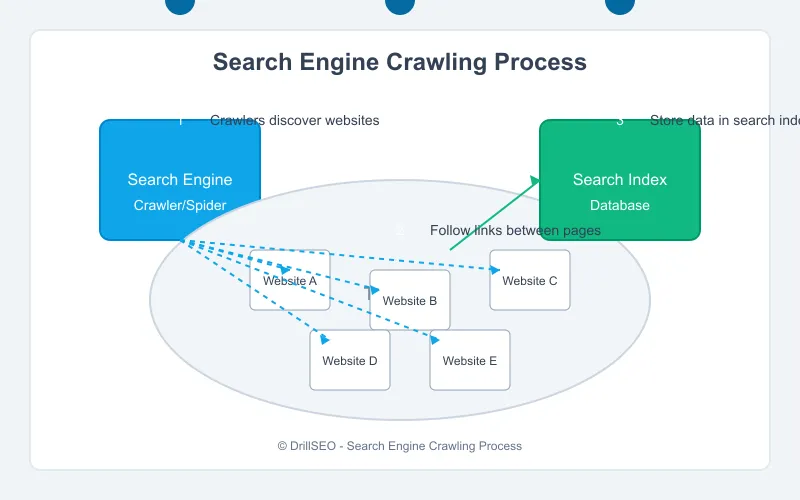
Search Engine Crawling Process
The three-step process of how search engines work: crawling, indexing, and ranking
1. Crawl
Search engines use automated programs called bots or spiders to discover and scan websites across the internet. These bots follow links from one page to another, building a map of the available content.
2. Index
After crawling, search engines store and organize the content they've discovered in a massive database called an index. This index contains information about all the websites and pages the search engine has found.
3. Rank
When a user performs a search, the search engine's algorithm analyzes the indexed content to determine which pages are most relevant to the query. The algorithm considers hundreds of ranking factors to decide the order in which results appear.
Important Note
Google updates its algorithm hundreds of times per year. Major updates can significantly impact rankings, so it's important to stay informed about algorithm changes and adapt your SEO strategy accordingly.
Key Components of SEO
SEO can be divided into several key components:
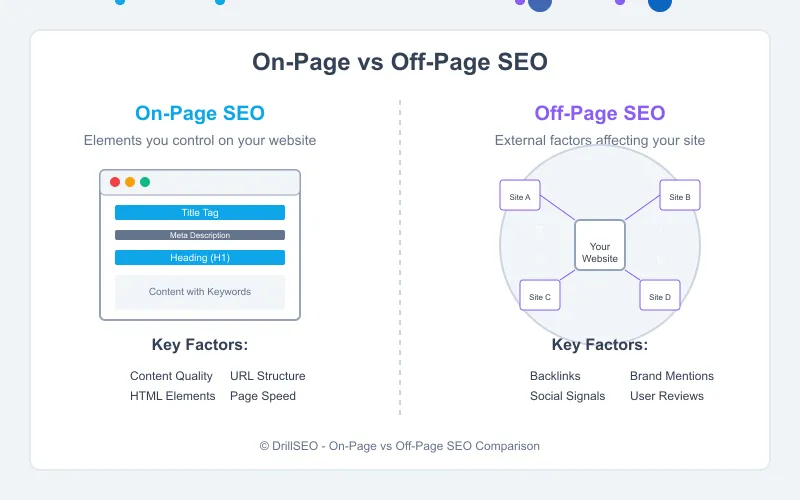
On-Page vs Off-Page SEO
Comparison of on-page and off-page SEO elements that affect your website's rankings
On-Page SEO
On-page SEO involves optimizing individual web pages to rank higher in search results. This includes:
Keyword Research and Optimization: Identifying and strategically incorporating relevant keywords into your content
Content Quality: Creating valuable, comprehensive, and original content that satisfies user intent
HTML Elements: Optimizing title tags, meta descriptions, headings, and image alt text
URL Structure: Creating clean, descriptive URLs that include target keywords
Internal Linking: Connecting related pages within your website to distribute page authority and help users navigate
Pro Tip: When optimizing content, focus on user intent rather than keyword density. Modern search engines prioritize content that best answers the user's query, not just content with the most keywords.
Off-Page SEO
Off-page SEO refers to actions taken outside of your website to impact your rankings. This primarily involves:
Backlinks: Links from other websites to yours, which serve as "votes of confidence" for your content
Social Signals: Shares, likes, and overall social media visibility
Brand Mentions: References to your brand across the web, even without links
Guest Blogging: Contributing content to other websites to build authority and earn backlinks
Technical SEO
Technical SEO focuses on improving the technical aspects of your website to help search engines crawl and index it more effectively. This includes:
Site Speed: Ensuring your website loads quickly on all devices
Mobile-Friendliness: Making your site responsive and accessible on mobile devices
Site Architecture: Organizing your website in a logical, hierarchical structure
XML Sitemaps: Providing search engines with a map of your website's content
Structured Data: Implementing schema markup to help search engines understand your content
HTTPS Security: Securing your website with SSL certification
Local SEO
For businesses serving specific geographic areas, local SEO is crucial. This involves:
Local Keywords: Targeting location-specific search terms
Local Citations: Ensuring your business information is consistent across online directories
Local Backlinks: Earning links from other local businesses and organizations
Reviews: Encouraging and managing customer reviews
SEO Best Practices for 2026
As search engines continue to evolve, so do SEO best practices. Here are some current strategies to focus on:
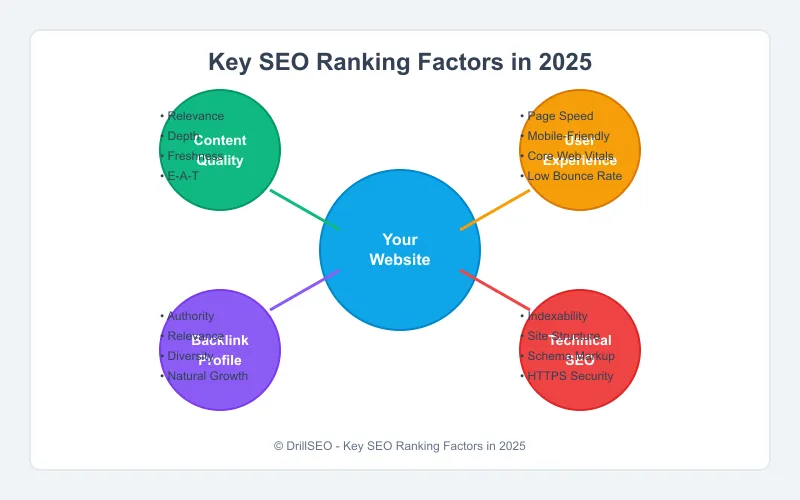
Key SEO Ranking Factors in 2026
The most important SEO ranking factors to focus on in 2026
1. Focus on User Experience
Google's algorithms increasingly prioritize websites that provide excellent user experiences. This includes fast loading times, easy navigation, and content that satisfies user intent.
2. Create High-Quality, Comprehensive Content
Content remains king in SEO. Focus on creating in-depth, valuable content that thoroughly addresses users' questions and needs.
Content Tip: Use the "skyscraper technique" by finding popular content in your niche, creating something even better, and then reaching out to sites linking to similar content. This can help you build quality backlinks while providing superior content.
3. Optimize for Voice Search
With the rise of voice assistants, optimizing for conversational, question-based queries is becoming increasingly important.
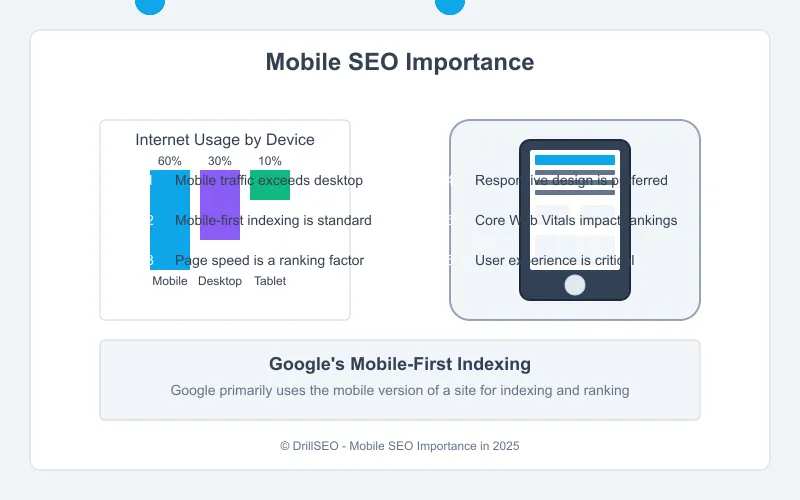
4. Prioritize Mobile Optimization
With Google's mobile-first indexing, ensuring your website performs well on mobile devices is no longer optional.
Mobile SEO Importance
The importance of mobile optimization for SEO in 2026
5. Leverage AI and Machine Learning
Use AI-powered SEO tools to gain insights, analyze competitors, and identify optimization opportunities.
6. Build Authoritative Backlinks
Focus on quality over quantity when it comes to backlinks. A few links from authoritative, relevant websites are more valuable than many low-quality links.
7. Implement Structured Data
Structured data helps search engines understand your content better and can lead to rich snippets in search results, increasing visibility and click-through rates.
SEO Strategy Note
The most successful SEO strategies combine all aspects: technical excellence, high-quality content, and strong off-page signals. Don't focus exclusively on just one area of SEO.
Common SEO Mistakes to Avoid
While implementing SEO strategies, be careful to avoid these common pitfalls:
Keyword Stuffing: Overusing keywords in an unnatural way
Duplicate Content: Publishing identical or very similar content across multiple pages
Ignoring Analytics: Failing to track and analyze your SEO performance
Neglecting Mobile Users: Not optimizing your website for mobile devices
Buying Links: Purchasing backlinks, which can lead to penalties from search engines
Focusing Only on Rankings: Prioritizing rankings over user experience and conversion rates
Warning: Black hat SEO techniques like hidden text, cloaking, or link schemes might provide short-term gains but can result in severe penalties from search engines, including complete removal from search results.
Measuring SEO Success
To determine if your SEO efforts are effective, track these key metrics:
Organic Traffic: The number of visitors coming to your site from search engines
Keyword Rankings: Your website's position in search results for target keywords
Conversion Rate: The percentage of visitors who complete desired actions (purchases, sign-ups, etc.)
Bounce Rate: The percentage of visitors who leave your site after viewing only one page
Page Load Speed: How quickly your pages load for users
Backlink Profile: The quantity and quality of websites linking to yours
Measurement Tip
Set up regular SEO audits (monthly or quarterly) to track your progress and identify new opportunities. Use tools like Google Search Console and Google Analytics to monitor your performance over time.
SEO Tools and Resources
Several tools can help you implement and monitor your SEO strategy:
Google Search Console: Free tool from Google that helps you monitor and troubleshoot your website's presence in search results
Google Analytics: Provides detailed information about your website traffic and user behavior
Ahrefs: Comprehensive SEO toolset for backlink analysis, keyword research, and competitor analysis
SEMrush: All-in-one marketing toolkit with strong SEO features
Moz: SEO software with tools for link building, keyword research, and site audits
Screaming Frog: Website crawler that helps identify technical SEO issues
Conclusion
SEO is not a one-time task but an ongoing process that requires consistent effort and adaptation to changing algorithms and user behaviors. By implementing the strategies outlined in this guide and staying updated with the latest trends and best practices, you can improve your website's visibility in search results and attract more organic traffic.
Final Tip: SEO is a marathon, not a sprint. Focus on building a solid foundation with technical excellence, high-quality content, and a good user experience. Consistent effort over time will yield the best results.
Remember that while SEO can drive significant results, it typically takes time to see the full impact of your efforts. Be patient, focus on providing value to your users, and the rankings will follow.
Looking to improve your SEO? Check out our free SEO tools to analyze your website, generate meta tags, and optimize your content for better search engine rankings.