Turning your blog into a reliable income source is more achievable than ever in 2026. With the right strategies and consistent effort, your blog can generate substantial revenue while you share your knowledge and passion with your audience. This comprehensive guide explores 10 proven monetization methods that successful bloggers are using today, with practical tips to implement each one effectively.
When Should You Start Monetizing Your Blog?
Before diving into specific monetization strategies, it's important to understand the right timing:
- Traffic Threshold - Some methods (like display ads) require minimum traffic levels
- Audience Relationship - Monetization works best when you've established trust with your readers
- Content Foundation - Having a solid base of quality content supports monetization efforts
While you can implement some monetization methods from day one (like affiliate marketing), others are more effective once you've built an audience. The key is to focus on providing value first, then introducing monetization naturally.
10 Proven Blog Monetization Strategies
1. Display Advertising
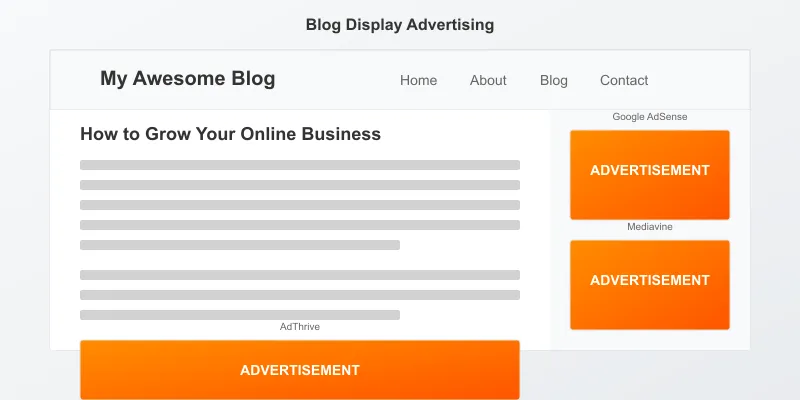
Display advertising remains one of the most straightforward ways to monetize a blog. You place ads on your site and earn money when visitors view or click on them.
How It Works:
- Join an ad network that places relevant ads on your site
- Earn revenue based on impressions (CPM) or clicks (CPC)
- Payments typically processed monthly once you reach a minimum threshold
Top Ad Networks in 2026:
- Google AdSense - Accessible for beginners with no minimum traffic requirements
- Mediavine - Higher rates but requires 50,000 sessions per month
- AdThrive - Premium rates for sites with 100,000+ pageviews per month
- Ezoic - Uses AI to optimize ad placement, accessible with lower traffic
Potential Income: $2-30+ per 1,000 pageviews, depending on your niche and the ad network
Pro Tips:
- Balance ad placement with user experience
- Test different ad positions to maximize revenue without hurting engagement
- As your traffic grows, graduate to premium networks for higher rates
2. Affiliate Marketing
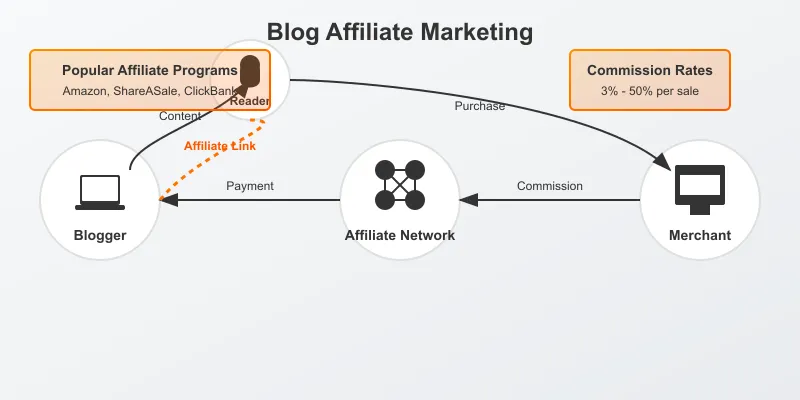
Affiliate marketing involves promoting products or services and earning a commission when your readers make purchases through your referral links.
How It Works:
- Join affiliate programs relevant to your niche
- Create content that naturally incorporates product recommendations
- Include your unique affiliate links
- Earn commissions on resulting sales (typically 3-50% depending on the product)
Popular Affiliate Programs:
- Amazon Associates - Vast product selection but lower commission rates (1-10%)
- ShareASale - Diverse marketplace with thousands of merchants
- Awin - Global network with many exclusive brands
- Impact - Works with many direct-to-consumer brands
- ClickBank - Focused on digital products with higher commission rates
- Partner programs - Many SaaS companies and product creators offer their own affiliate programs with higher rates
Potential Income: Highly variable, from a few dollars to thousands per month depending on your traffic, niche, and the products you promote
Pro Tips:
- Only promote products you've used and genuinely recommend
- Create in-depth reviews and comparison posts
- Disclose affiliate relationships transparently (it's legally required)
- Focus on solving problems rather than pushing products
- Create resource pages featuring your top affiliate recommendations
3. Sponsored Content
Sponsored content involves creating posts or videos in partnership with brands who pay you to feature their products or services.
How It Works:
- Brands pay you to create content featuring their products
- You maintain creative control while incorporating the brand message
- Content is published on your blog and sometimes shared on social media
Finding Sponsored Opportunities:
- Direct outreach - Contact brands you love
- Influencer platforms - Join networks like Aspire IQ, Activate, or Intellifluence
- Media kits - Create a professional media kit showcasing your audience and rates
- Relationship building - Network with brands at industry events
Potential Income: $250-2,500+ per post depending on your niche, audience size, and engagement
Pro Tips:
- Only work with brands that align with your values and audience interests
- Clearly disclose sponsored relationships
- Maintain your authentic voice even in sponsored content
- Set clear expectations and deliverables in contracts
- Provide additional value like detailed analytics reports
4. Digital Products
Creating and selling your own digital products can be one of the most profitable blog monetization strategies.
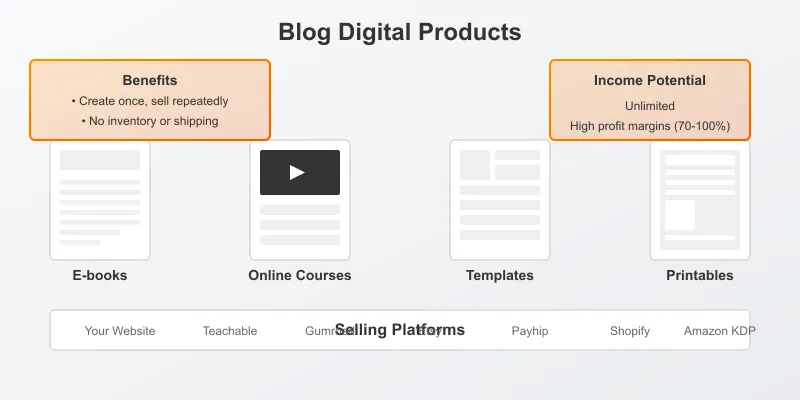
Popular Digital Products:
- E-books - Comprehensive guides on your area of expertise
- Online courses - In-depth training with video, text, and interactive elements
- Templates - Customizable resources that solve specific problems
- Printables - Downloadable worksheets, planners, or art
- Presets/filters - For photography or design blogs
- Software tools - Apps or plugins that solve problems in your niche
Platforms for Selling Digital Products:
- Your own website - Using WooCommerce, Easy Digital Downloads, or similar plugins
- Teachable or Thinkific - For hosting and selling courses
- Gumroad - Simple platform for selling digital products
- Etsy - Marketplace for digital downloads and printables
- Payhip - Low-fee platform for digital products
Potential Income: Unlimited; successful digital products can generate thousands monthly with minimal ongoing work
Pro Tips:
- Start with a small, focused product that solves a specific problem
- Use your blog content to identify what your audience needs most
- Create a sales funnel with free content leading to your paid offerings
- Offer tiered pricing options for different customer needs
- Update your products regularly to maintain their value
5. Membership Sites and Subscriptions
Recurring revenue models like memberships provide stable, predictable income.
How It Works:
- Create premium content, tools, or community access available only to paying members
- Charge a recurring subscription fee (monthly or annually)
- Continually add value to maintain memberships
Membership Site Ideas:
- Premium content libraries - Exclusive articles, videos, or resources
- Community forums - Private discussion spaces for networking
- Coaching groups - Regular Q&A sessions and personalized advice
- Resource access - Templates, tools, or databases
- Course libraries - Access to multiple courses or training materials
Platforms for Memberships:
- MemberPress - WordPress plugin for membership sites
- Patreon - Platform for creator subscriptions
- Substack - For newsletter subscriptions
- Ghost - Publishing platform with built-in memberships
- Circle - Community platform with membership features
Potential Income: Highly scalable; even 100 members at $20/month equals $2,000 monthly recurring revenue
Pro Tips:
- Offer multiple membership tiers at different price points
- Create a content calendar specifically for member content
- Foster community interaction to increase retention
- Provide clear value that justifies the recurring cost
- Consider annual payment options with a discount
6. Online Coaching or Consulting
Leveraging your expertise through one-on-one or group coaching can be highly profitable.
Service Offerings:
- One-on-one coaching - Personalized guidance at premium rates
- Group coaching - Working with multiple clients simultaneously
- Consulting packages - Focused advice on specific problems
- VIP days - Intensive, full-day sessions
- Audits or reviews - Analyzing and providing recommendations
Potential Income: $50-500+ per hour depending on your expertise and niche
Pro Tips:
- Create clear packages with defined deliverables
- Use scheduling software like Calendly to manage bookings
- Collect testimonials from satisfied clients
- Consider creating a signature framework or methodology
- Set boundaries to prevent burnout
7. Physical Products
Creating branded merchandise or physical products related to your niche can be a natural extension of your blog.
Product Options:
- Print-on-demand merchandise - Branded t-shirts, mugs, etc.
- Published books - Physical versions of your content
- Niche-specific products - Items related to your blog topic
- Subscription boxes - Curated physical products sent regularly
Platforms for Physical Products:
- Printful or Printify - Print-on-demand services
- Shopify - E-commerce platform for online stores
- Etsy - Marketplace for handmade and unique items
- Amazon KDP - For publishing physical books
- WooCommerce - WordPress plugin for e-commerce
Potential Income: Variable based on product type, pricing, and sales volume
Pro Tips:
- Start with print-on-demand to minimize inventory risk
- Test products with your audience before full launch
- Consider the logistics of shipping and fulfillment
- Create products that complement your content
- Use your blog to tell the story behind your products
8. Selling Premium Content
Beyond full courses or memberships, you can sell individual pieces of premium content.
Premium Content Ideas:
- In-depth guides - Comprehensive resources on specific topics
- Webinar recordings - Past training sessions
- Resource libraries - Collections of templates or tools
- Data reports - Original research or analysis
- Premium newsletters - Exclusive content delivered via email
Potential Income: Depends on pricing and volume; typically $5-100 per sale
Pro Tips:
- Create premium content that goes deeper than your free blog posts
- Offer bundles of related premium content at a discount
- Use free content to demonstrate the value of your premium offerings
- Update premium content regularly to maintain its relevance
9. Freelance Services
Your blog can serve as a portfolio and lead generation tool for freelance services related to your expertise.
Popular Freelance Services:
- Writing or content creation
- Design or development
- SEO or marketing
- Social media management
- Photography or video production
- Editing or proofreading
Potential Income: Highly variable based on your skills and industry; typically $25-200+ per hour
Pro Tips:
- Create a dedicated "Services" page on your blog
- Showcase case studies and results from past clients
- Use your blog content to demonstrate your expertise
- Create a streamlined onboarding process for new clients
- Consider productizing your services with fixed-scope packages
10. Selling Your Blog
While not a recurring monetization strategy, building and selling a blog can result in a significant payday.
How It Works:
- Build a profitable blog with diverse revenue streams
- Document systems and processes
- List your blog on a marketplace or work with a broker
- Negotiate with potential buyers
- Transfer ownership for a lump sum payment
Valuation Factors:
- Monthly revenue (typically 24-40x monthly profit)
- Traffic trends and sources
- Revenue diversity
- Growth potential
- Age of the blog
- Included assets (email list, social accounts, etc.)
Potential Income: Anywhere from a few thousand dollars to seven figures for established, profitable blogs
Pro Tips:
- Build your blog with an eventual sale in mind
- Keep detailed financial records
- Diversify traffic and revenue sources
- Create systems that don't rely on you personally
- Consider working with a broker who specializes in blog sales
Creating a Diversified Monetization Strategy
The most successful bloggers rarely rely on just one income stream. Here's how to build a diversified approach:
- Start with low-barrier methods - Begin with affiliate marketing and ads while building your audience
- Add complementary streams - Choose monetization methods that work well together
- Consider your audience's journey - Offer options at different price points
- Balance passive and active income - Mix methods that require your time with those that don't
- Test and optimize - Regularly review performance and adjust your strategy
Common Blog Monetization Mistakes to Avoid
- Monetizing too early - Focus on building an audience and trust first
- Overloading with ads - Excessive ads hurt user experience and can reduce overall revenue
- Promoting products you don't believe in - Damages trust and leads to poor conversion rates
- Neglecting email marketing - Your email list is often your most valuable monetization asset
- Copying others blindly - What works in one niche may not work in yours
- Giving up too quickly - Monetization often requires testing and refinement
Conclusion
Blog monetization in 2026 offers more opportunities than ever before. By implementing a strategic combination of these 10 proven methods, you can create a sustainable income from your blog while continuing to provide value to your audience.
Remember that successful monetization is built on a foundation of quality content and genuine audience relationships. Focus first on serving your readers, and the revenue will follow naturally as you introduce monetization methods that align with their needs and your expertise.
Start with one or two strategies that feel most aligned with your blog's purpose and audience, then expand and diversify as you grow. With patience and persistence, your blog can evolve from a passion project into a profitable business.
Related Articles
Frequently Asked Questions
How much traffic do I need to monetize my blog?
You can start monetizing with any amount of traffic through methods like affiliate marketing and digital products. However, for significant ad revenue, you'll typically need at least 10,000 monthly pageviews, and premium ad networks require 50,000+ sessions per month.
Which blog monetization method is most profitable?
Creating and selling your own digital products or services typically offers the highest profit margins and income potential. However, the best approach is usually a combination of multiple methods tailored to your specific audience and niche.
How long does it take to make a full-time income from blogging?
Most successful bloggers take 18-36 months of consistent effort to reach a full-time income. The timeline varies based on your niche, content quality, promotion strategies, and monetization methods.
Do I need to pay taxes on blog income?
Yes, blog income is taxable in most countries. Keep detailed records of revenue and expenses, and consider consulting with a tax professional who specializes in online businesses to ensure proper compliance.