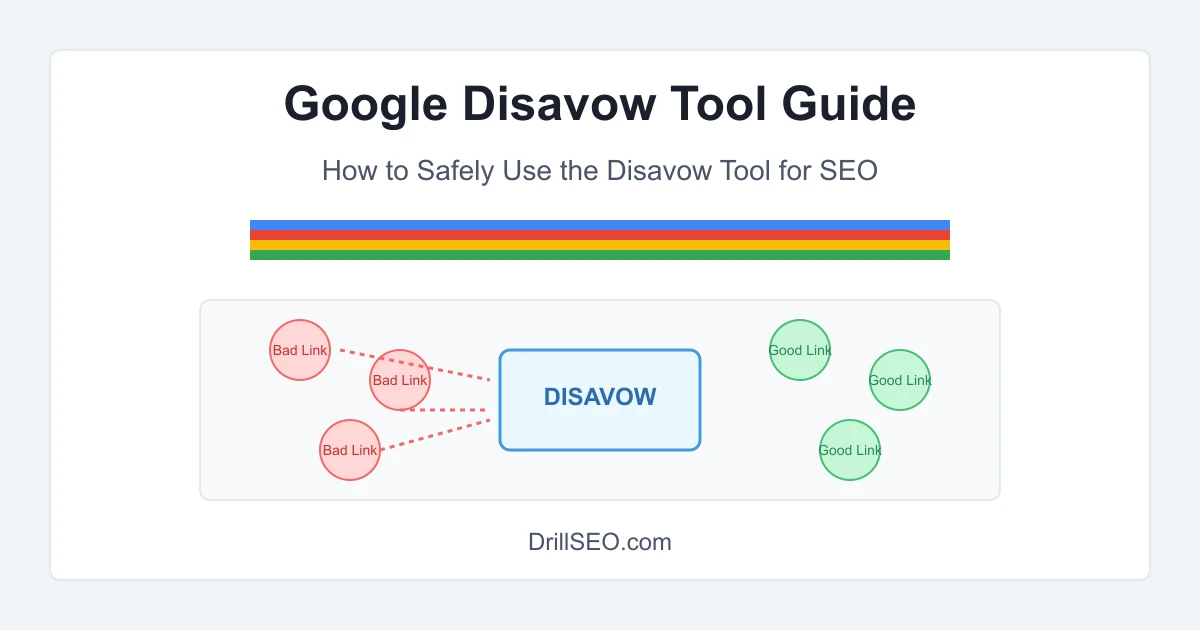
In the world of SEO, backlinks remain a crucial ranking factor. However, not all backlinks are beneficial—some can actually harm your website's search performance. Google's Disavow Tool provides a way to address this issue, but it must be used with caution. This comprehensive guide explains what the Disavow Tool is, when to use it, and how to use it safely.
Important: The Disavow Tool is an advanced feature that should only be used with caution. Incorrect use can potentially harm your site's performance in search results.
What is Google's Disavow Tool?
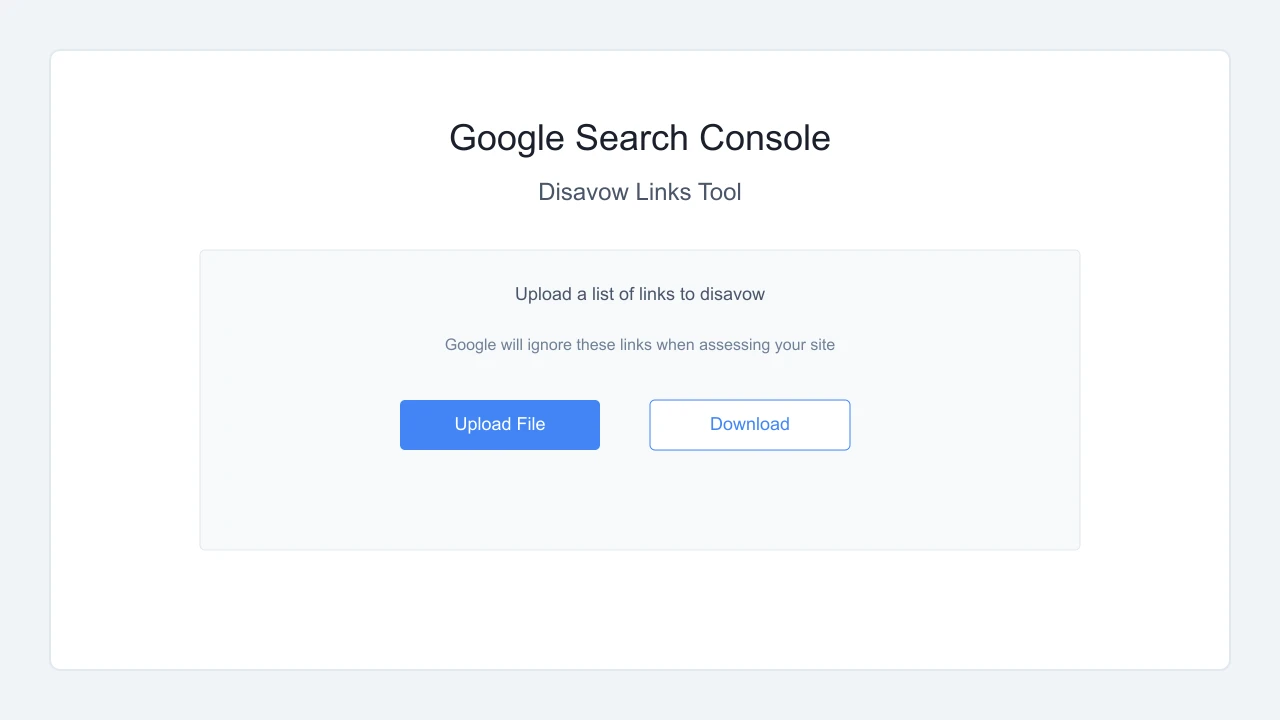
The Disavow Tool is a feature in Google Search Console that allows website owners to tell Google to ignore specific backlinks when assessing their site. It's essentially a way to inform Google that you don't want certain links to be considered as part of your site's link profile.
When Should You Use the Disavow Tool?
The Disavow Tool should be used sparingly and only in specific situations:
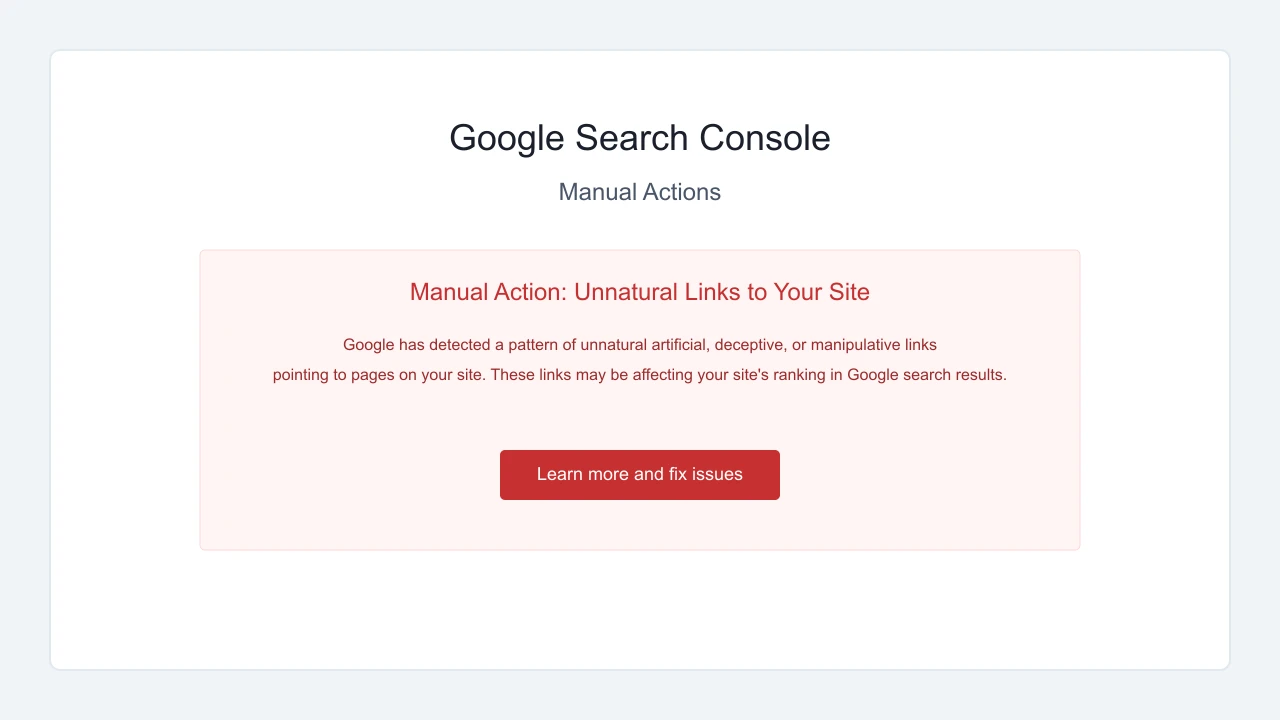
1. Manual Action for Unnatural Links
If you've received a manual action notification in Google Search Console specifically mentioning "unnatural links to your site," this is a clear indication that Google has identified problematic backlinks pointing to your website.
2. Significant Toxic Backlink Profile
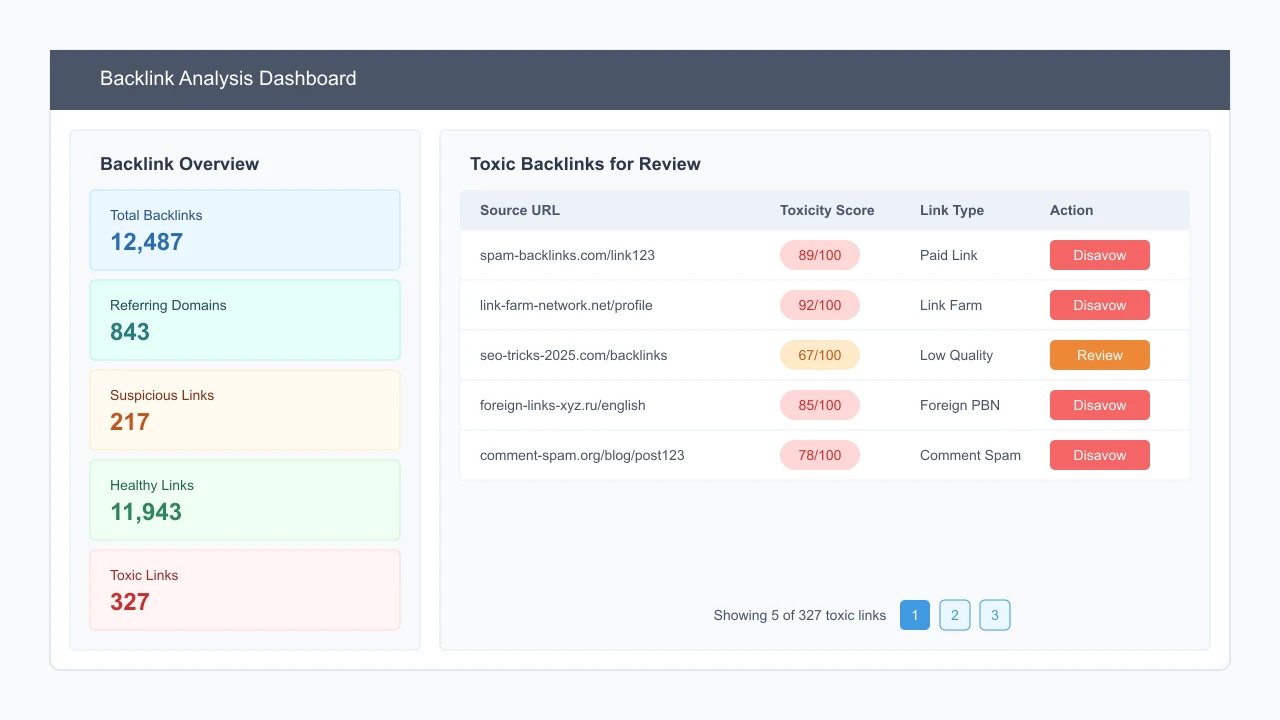
If a thorough backlink audit reveals a substantial number of toxic or spammy backlinks that you cannot remove through outreach, disavowing may be necessary. This is especially true if:
- You've identified a large number of links from known link farms or PBNs (Private Blog Networks)
- Your site has been the target of negative SEO attacks
- You've previously engaged in questionable link building practices
When NOT to Use the Disavow Tool
Don't use the Disavow Tool if:
- You haven't received a manual action
- You're just trying to "clean up" your backlink profile without evidence of harm
- You're disavowing links simply because they come from low-authority sites
- You haven't first attempted to remove the problematic links directly
How to Safely Use the Disavow Tool: Step-by-Step Guide
Step 1: Conduct a Thorough Backlink Audit
Before using the Disavow Tool, you need to know exactly which links to disavow. This requires a comprehensive backlink audit:
- Use tools like Ahrefs, SEMrush, or Moz to export your complete backlink profile
- Analyze each link for quality, relevance, and potential harm
- Flag suspicious links that match known patterns of toxic backlinks
- Create a spreadsheet to track all potentially harmful links
Step 2: Attempt Link Removal First
Before disavowing links, you should attempt to have them removed directly:
- Contact the webmasters of sites with problematic links
- Politely request removal of the links
- Document all your removal attempts for future reference
- Wait a reasonable time (2-3 weeks) for responses
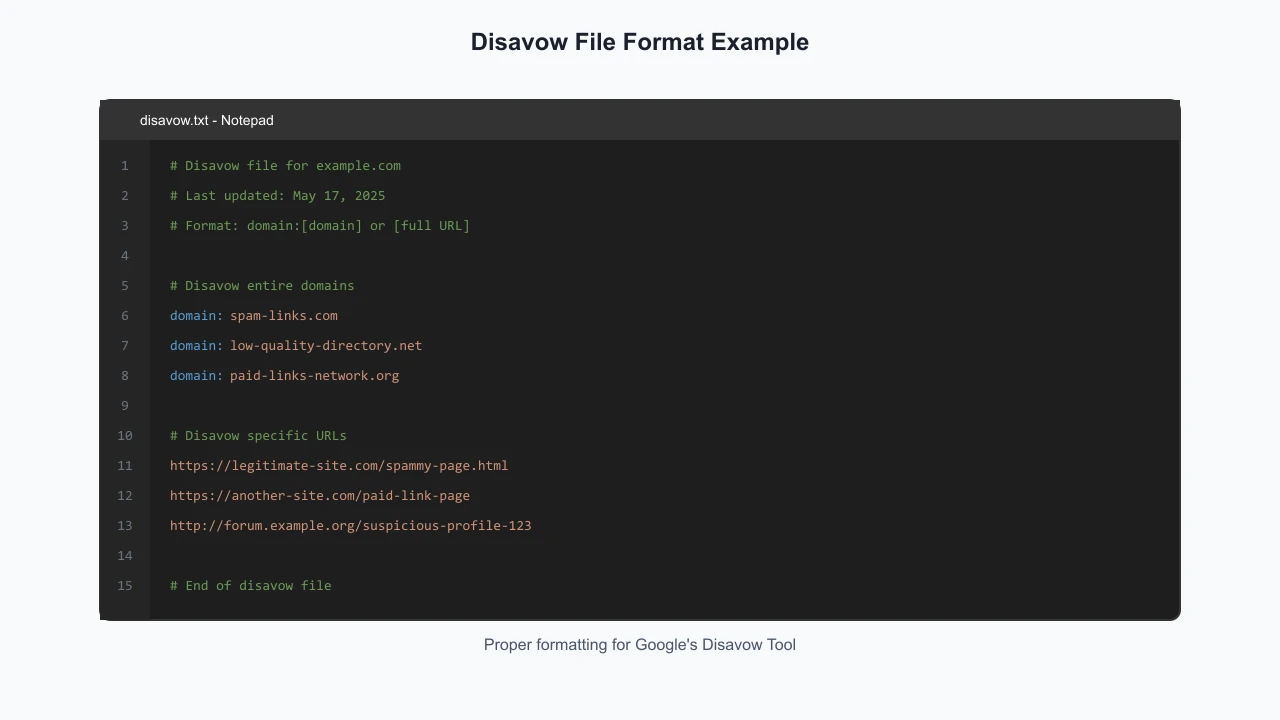
Step 3: Create Your Disavow File
After exhausting removal attempts, create a disavow file for the remaining problematic links:
- Create a plain text file (.txt)
- Use the proper format: domain:[domain] for entire domains or full URLs for specific pages
- Add comments using the # symbol at the beginning of lines
- Include only links you're confident are harmful
Step 4: Submit Your Disavow File
Once your disavow file is ready, submit it through Google Search Console:
- Go to Google Search Console
- Select your property
- Navigate to the Disavow Tool (under "Links" or directly at https://search.google.com/search-console/disavow-links)
- Upload your disavow file
- Confirm the submission
Step 5: Monitor and Maintain
After submitting your disavow file:
- Keep a backup of your disavow file
- Continue monitoring your backlink profile regularly
- Update your disavow file as needed with new toxic links
- Track your search performance to observe any changes
Best Practices and Common Mistakes
Best Practices
- Be conservative: When in doubt, don't disavow
- Focus on domains: In most cases, disavowing entire domains is safer than individual URLs
- Document everything: Keep detailed records of all links you disavow and why
- Regular maintenance: Update your disavow file periodically as new toxic links appear
Common Mistakes
- Disavowing too many links: Being overly aggressive can harm your SEO
- Disavowing natural links: Don't disavow links just because they come from low-authority sites
- Format errors: Incorrect formatting can cause your disavow file to be ignored
- Disavowing without research: Never disavow links without thoroughly investigating them first
Frequently Asked Questions
How long does it take for disavowed links to be ignored?
It typically takes Google a few weeks to process your disavow file and recrawl the disavowed links. The full impact may not be visible for 1-3 months.
Can I remove links from my disavow file later?
Yes. You can download your current disavow file from Google Search Console, remove entries, and reupload the updated file.
Will disavowing links help me recover from a penalty?
If your site has received a manual action due to unnatural links, disavowing those links (after attempting removal) is a necessary step toward recovery. However, recovery is not guaranteed and depends on the overall quality of your site.
Should I disavow nofollow links?
Generally, no. Nofollow links already tell search engines not to pass link equity, so disavowing them is usually unnecessary unless they're part of a clearly manipulative pattern.
Conclusion
The Disavow Tool is a powerful instrument in your SEO toolkit, but it should be used with caution and only when necessary. By following the steps and best practices outlined in this guide, you can safely use the Disavow Tool to protect your website from harmful backlinks without risking your legitimate link equity.
Remember that building a natural, high-quality backlink profile is always preferable to relying on the Disavow Tool. Focus on creating valuable content that naturally attracts links, and you'll minimize the need for disavowing in the first place.