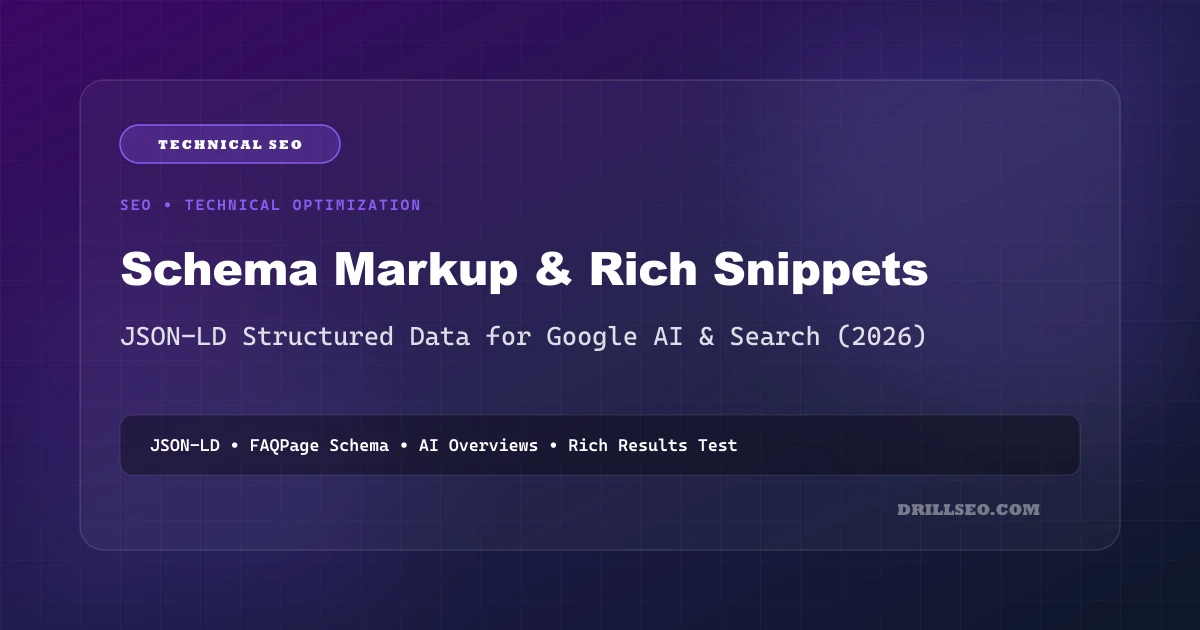
Schema markup — structured data organized according to the universal Schema.org vocabulary — is the explicit machine-readable layer that transforms standard search engine listings into rich, interactive search snippets. From star ratings and FAQ accordions to software application badges and author entity graphs, structured data gives Google unambiguous context regarding your website's entities. In 2026, schema markup is also the primary data conduit that AI Overviews and conversational AI engines use to extract definitive, quotable answers.
In this comprehensive technical implementation guide, you will learn the exact JSON-LD markup patterns for TechArticle, SoftwareApplication, FAQPage, Organization, and BreadcrumbList, along with validation protocols and common implementation pitfalls.
Why JSON-LD Structured Data Wins Over Microdata
While Schema.org allows Microdata and RDFa embedded directly into HTML attributes, JSON-LD (JavaScript Object Notation for Linked Data) is Google's officially recommended format:
- Separation of Concerns: JSON-LD is delivered as an independent
<script type="application/ld+json">block in your document<head>, completely decoupling schema data from presentation HTML. - Entity Graph Modeling (
@graph): JSON-LD allows you to nest multiple interrelated entities (Organization → Author → WebSite → Article) inside a single unified payload without duplicating attributes. - Easier Automation: In modern frameworks like Next.js App Router or React, generating JSON-LD objects programmatically from post frontmatter is clean, type-safe, and bug-free.
1. TechArticle & BlogPosting Schema with @graph Linkage
For technical tutorials, coding guides, and digital marketing teardowns, using TechArticle provides richer contextual relevance than generic Article:
{
  "@context": "https://schema.org",
  "@graph": [
    {
      "@type": "Organization",
      "@id": "https://drillseo.com/#organization",
      "name": "DrillSEO",
      "url": "https://drillseo.com",
      "logo": "https://drillseo.com/logo.webp"
    },
    {
      "@type": "WebSite",
      "@id": "https://drillseo.com/#website",
      "url": "https://drillseo.com",
      "name": "DrillSEO",
      "publisher": { "@id": "https://drillseo.com/#organization" }
    },
    {
      "@type": "TechArticle",
      "@id": "https://drillseo.com/seo/schema-markup-rich-snippets-implementation-guide/#article",
      "isPartOf": { "@id": "https://drillseo.com/#website" },
      "headline": "Schema Markup & Structured Data Guide 2026: Rich Snippets",
      "description": "Comprehensive guide to implementing JSON-LD structured data for rich snippets, entity graphs, and AI search visibility.",
      "datePublished": "2026-05-18T00:00:00.000Z",
      "dateModified": "2026-05-18T00:00:00.000Z",
      "author": {
        "@type": "Person",
        "name": "DrillSEO Editorial Team",
        "url": "https://drillseo.com/about"
      },
      "publisher": { "@id": "https://drillseo.com/#organization" },
      "inLanguage": "en-US"
    }
  ]
}
2. SoftwareApplication Schema for Mobile Apps & Web Tools
If you build proprietary Android apps, calculators, or web utilities, marking them with SoftwareApplication unlocks rich app install buttons and rating badges in Google search:
{
  "@context": "https://schema.org",
  "@type": "SoftwareApplication",
  "name": "DrillSEO Utility Suite",
  "operatingSystem": "ANDROID",
  "applicationCategory": "UtilitiesApplication",
  "aggregateRating": {
    "@type": "AggregateRating",
    "ratingValue": "4.8",
    "ratingCount": "1250"
  },
  "offers": {
    "@type": "Offer",
    "price": "0",
    "priceCurrency": "USD"
  }
}
3. FAQPage Schema Rules & Best Practices
FAQ schema produces expanding accordion questions directly inside search results. Google reserves FAQ rich results primarily for authoritative, well-known government and health authorities, but valid FAQ structured data remains strongly recognized by generative search crawlers (ChatGPT, Perplexity):
{
  "@context": "https://schema.org",
  "@type": "FAQPage",
  "mainEntity": [
    {
      "@type": "Question",
      "name": "What is the difference between JSON-LD and Microdata?",
      "acceptedAnswer": {
        "@type": "Answer",
        "text": "JSON-LD is a standalone JavaScript script block placed in the document head, whereas Microdata is embedded directly within HTML tags. Google officially recommends JSON-LD for its cleaner syntax and decoupling from page design."
      }
    },
    {
      "@type": "Question",
      "name": "Does adding schema markup directly guarantee rich results in Google?",
      "acceptedAnswer": {
        "@type": "Answer",
        "text": "No. Valid schema markup makes a page technically eligible for rich results, but Google algorithms decide whether to display them based on domain trust, search intent, and content quality."
      }
    }
  ]
}
4. BreadcrumbList Schema for Enhanced Navigation
Breadcrumb markup replaces raw ugly URLs in search results with clean, hierarchical path breadcrumbs (e.g., DrillSEO > SEO > Structured Data):
{
  "@context": "https://schema.org",
  "@type": "BreadcrumbList",
  "itemListElement": [
    {
      "@type": "ListItem",
      "position": 1,
      "name": "Home",
      "item": "https://drillseo.com"
    },
    {
      "@type": "ListItem",
      "position": 2,
      "name": "SEO",
      "item": "https://drillseo.com/seo"
    },
    {
      "@type": "ListItem",
      "position": 3,
      "name": "Schema Markup Guide",
      "item": "https://drillseo.com/seo/schema-markup-rich-snippets-implementation-guide"
    }
  ]
}
5. Validating Structured Data
- Google Rich Results Test (search.google.com/test/rich-results): Checks whether your markup meets Google's strict criteria for rich snippet eligibility.
- Schema.org Validator (validator.schema.org): Checks syntax compliance against the full global Schema.org vocabulary, flagging undefined properties or broken references.
Top 5 Schema Mistakes That Trigger Algorithmic Devaluation
- Content Disparity: Marking up data in JSON-LD that is completely absent or hidden from human visitors on the page (violates Google spam policies).
- Missing Required Properties: Leaving out mandatory fields (e.g.,
headlineorimagein Article schema). - Fake Review Ratings: Hardcoding 5-star aggregate ratings on pages without actual user reviews or third-party verification.
- Invalid Date Formats: Dates must strictly adhere to ISO 8601 format (
YYYY-MM-DDThh:mm:ssZ). - Broken @id Graph References: Linking to
#organizationwithout defining the corresponding Organization node in the graph.