The New Era of Social Media & Paid Performance in 2026
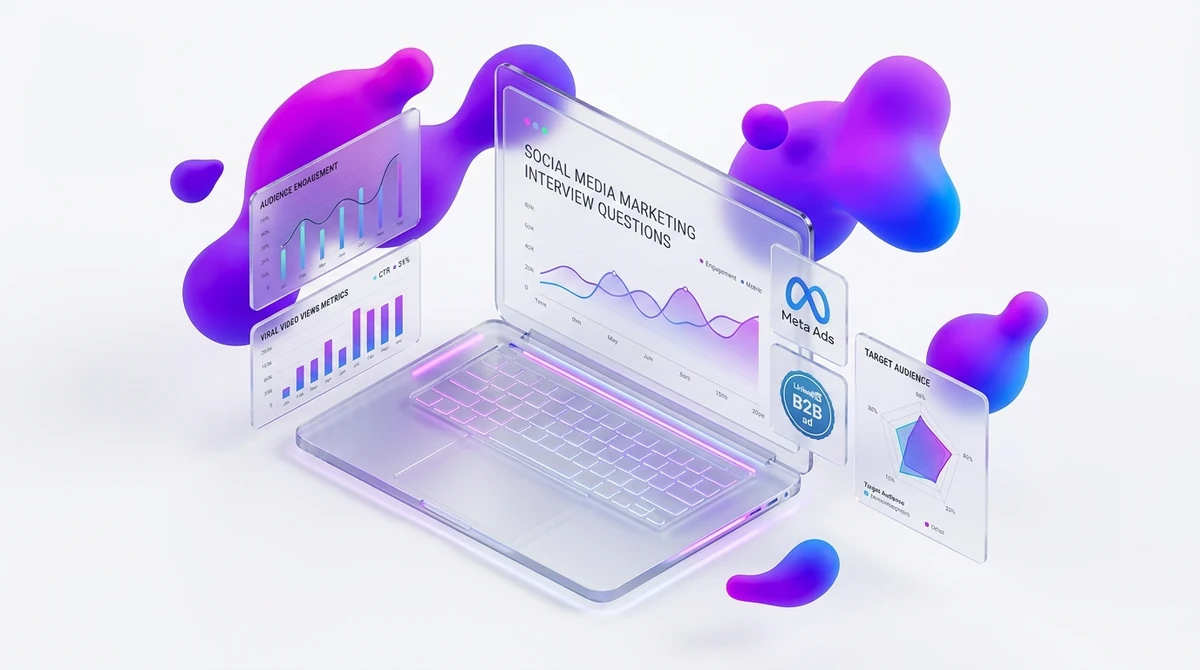
Social media marketing has evolved far beyond superficial vanity metrics like follower counts and post likes. In 2026, social channels function as high-velocity performance customer acquisition engines, viral organic community hubs, and crucial signals for multi-touch attribution. Hiring managers for Social Media Strategist, Paid Social Lead, and Growth Marketing roles test your technical understanding of server-side event matching (Meta CAPI), algorithmic short-form video hooks, B2B demand gen, and creative testing frameworks.
Social Media Platform Landscape & Performance Benchmarks
| Platform | Primary Audience Demographics | Highest-Converting Ad Format | Key Organic Metric | Target ROAS / Benchmark |
|---|---|---|---|---|
| Meta (Instagram & Facebook) | Broad: 18 – 65+ (E-commerce, D2C, Services) | Advantage+ Shopping / Reels Video | Saves & DM Shares | 3.0x – 5.5x ROAS |
| B2B Professionals, Decision-Makers, Enterprise | Document Carousels & Thought Leader Ads | Meaningful Comments & Reposts | $60 – $180 Cost Per Lead | |
| TikTok | Gen Z & Millennials: 16 – 34 (Trends, Beauty, Tech) | Native UGC Spark Ads | Average Watch Time / Completion Rate | > 65% Hook Rate (3-sec) |
| YouTube (Shorts & Long-form) | High-intent search & long-form education | Demand Gen & Skippable In-Stream | Audience Retention % | Cost Per View < $0.04 |
Part 1: Meta Ads Manager & Performance Engineering
1. What is the Meta Conversions API (CAPI) and how does it prevent signal loss?
Answer: The Meta Pixel operates client-side in the browser, leaving it vulnerable to ad-blockers, iOS App Tracking Transparency (ATT), and strict third-party cookie restrictions. Meta CAPI creates a direct server-to-server connection between your website backend and Meta's servers. Best practice is to run Redundant Setup with Event Deduplication:
- Fire both the Meta Pixel in the browser and Meta CAPI from the server for every key event (e.g.,
Purchase). - Pass an identical unique
event_idandevent_nameparameter in both payloads. - Meta automatically deduplicates the duplicate signal, resulting in a higher Event Match Quality (EMQ) score (typically 8.0+/10) and recovering 20-30% of otherwise lost conversion attribution.
2. What are Advantage+ Shopping Campaigns (ASC) and how do they differ from manual campaign setups?
Answer: Advantage+ Shopping Campaigns replace traditional manual audience targeting with machine learning automation. In a manual campaign, advertisers configure distinct ad sets for broad targeting, interest targeting, lookalikes, and retargeting. In ASC:
- Audience targeting is consolidated into a single campaign that dynamically optimizes budget across all funnel stages.
- Advertisers define an Existing Customer Budget Cap (e.g., max 15% budget spent on current buyers) to ensure the majority of budget drives net-new customer acquisition.
- Creative diversity becomes the primary targeting lever—different creative angles naturally attract distinct customer personas.
3. What is the difference between Custom Audiences and Lookalike Audiences?
Answer:
- Custom Audiences: Built from First-Party data: customer email/phone CRM uploads, website visitors via pixel, app users, or people who engaged with your Instagram/Facebook profile or video content.
- Lookalike Audiences (LAL): Meta's algorithm identifies users who share behavioral, demographic, and interest characteristics with your source Custom Audience. Standard best practice is testing 1%, 2%, and 3-5% Lookalikes seeded from your top 10% highest-LTV buyers.
Part 2: B2B Social Strategy & LinkedIn Advertising
4. How do you design an effective B2B Demand Generation strategy on LinkedIn?
Answer: Effective B2B marketers avoid forcing cold prospects into gated lead generation forms with high friction. Modern LinkedIn demand gen uses a Ungated Thought Leadership & Retargeting Model:
- Top of Funnel (Demand Creation): Promote ungated Document Carousels, video breakdowns, and Thought Leader Ads (sponsored posts directly from the CEO or technical founder's profile) targeting specific job titles and company sizes. No form gates.
- Middle of Funnel (Retargeting): Retarget users who viewed 50%+ of videos or engaged with company page posts with case study proofs and interactive product demos.
- Bottom of Funnel (Demand Capture): Deploy LinkedIn Native Lead Gen Forms offering a personalized demo or high-intent consultation, eliminating website form drop-offs.
5. What is Social Selling Index (SSI) on LinkedIn and what are its four pillars?
Answer: SSI is LinkedIn's proprietary metric (0 to 100) measuring a professional's brand presence. The four pillars (25 points each) are:
- Establishing your professional brand with thought-leadership content.
- Finding the right people using advanced search filters.
- Engaging with insights and participating in industry discussions.
- Building trusted relationships with decision-makers.
Part 3: Creative Strategy & Combating Ad Fatigue
6. What is the "Hook Rate" and "Hold Rate" in short-form video ads (Reels / TikTok)?
Answer: These two video retention metrics diagnose creative drop-off:
- Hook Rate (3-Second View Rate):
(3-Second Video Plays / Impressions) × 100. Gauges whether your opening visual, text hook, or audio arrests user scrolling. Benchmark: > 35% – 45%. - Hold Rate (Completion / Average Watch Time):
(ThruPlays or 15-Second Views / 3-Second Plays) × 100. Evaluates whether the narrative body maintains interest and leads effectively into the CTA.
7. How do you systematically test creatives to prevent ad fatigue?
Answer: I run a Dynamic Creative Testing Sandbox (DCT) framework: test 3 visual concepts × 2 text copies × 2 headlines in an isolated testing campaign. The single winning combination with the lowest CPA is graduated to the primary scaling campaign. This protects budget while continuously refreshing the creative pipeline.